Nexus Logistics Core
A field team of 100 engineers ran on carbon-paper job cards and triple-keyed bookkeeping, leaving weeks between finishing a job and billing for it. We replaced the paper with an offline-first app that captures each job on site — so invoices go out the same day, not weeks later.
The work was fast; the paperwork was not. A hundred engineers finished jobs on site, then their signed cards travelled back to the office by internal post. Every wage calculation and client invoice waited on that journey — weeks of it.
We gave the field team an app that works with or without signal, so every job is logged, photographed, and priced the moment it's done. Cash that used to sit in a van for a week is now invoiced the same day — and the clean record it leaves behind is what makes everything after it possible.
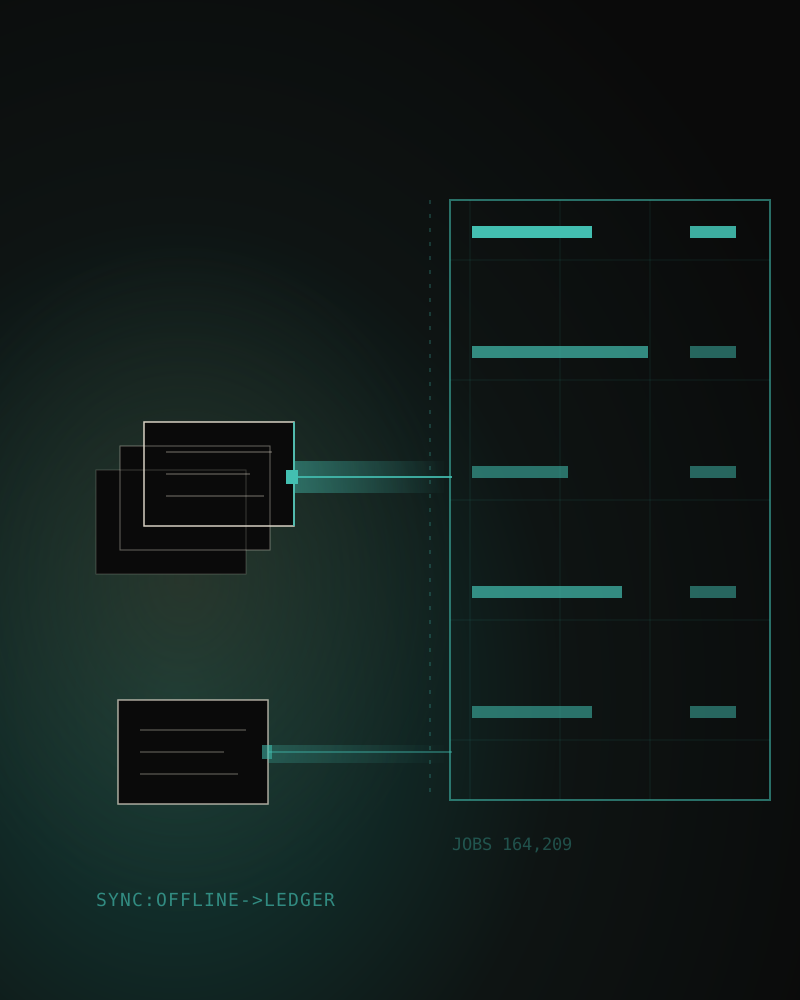
- Work cards digitized
- 164,209
- Job photos captured
- 746,415
- Revenue invoiced through the system
- £65,683,600
From carbon paper to same-day billing
A construction-services firm ran its 100-strong field team on printed work cards, weekly paperwork runs, and books that were keyed three times over. We rebuilt that on a single system: engineers work from an app in the field, and the office sees finished, priced, invoice-ready jobs in real time. It now handles the firm's core billing pipeline — £65,683,600 invoiced across 164,209 jobs to date.
Where the weeks went
Every delay came from the same place: the job was done on site, but the record of it moved on paper.
The paper start
Every job began with printed packs, site maps, and carbon-copy cards, handed out by hand at the depot before an engineer could set off.
The logistics loop
Engineers collected signatures on site, kept the paperwork in the van, and drove it back to a branch office about once a week.
The billing backlog
Accounts received these batches by internal post, matched them against completion sheets by hand, checked every engineer's variable pay line by line, and re-typed the lot into the ledger to raise each client invoice.
Inside the build
From the depot to the client's inbox, one connected system.
Field app / React + Local Sync
The engineer's app works fully offline — specs, schedules, and checklists are all there with no signal. It won't accept a half-finished job: it requires the GPS location, a synced timestamp, and photos from set angles before the work can be marked done.
Photo pipeline / Azure Storage Blobs
746,415 site photos, handled without a hitch. Each one uploads from the device the moment there's signal and is filed against its job, so nothing is ever orphaned or lost.
Pricing engine / .NET + MS SQL
The back end takes each finished job, prices it against the firm's own labour and pay rules automatically, and queues it for a manager to approve — no re-keying.
Deferred sign-off
If the person who needs to sign off isn't on site, the job holds its state on the device and picks up exactly where it left off on the next visit — nothing re-entered.
Remote sign-off portal
Signed off remotely, too: the captured job is posted to a secure web link and emailed straight to the client's decision-maker, so approval doesn't wait for anyone to be on site.
What a clean record unlocks
A clean record is what makes everything after it possible.
Live client view
Clients can see their own jobs as they progress, which cuts the calls and emails asking where things stand.
Automatic rebate matching
Finished work is checked against suppliers' delivery records automatically, recovering rebates that used to slip through unnoticed.
Ready for AI
Years of messy paper activity are now clean, structured data — the groundwork for predicting schedules and letting software handle routine decisions.
This is what we'd map for your firm.
Tell us where the time goes. We'll tell you plainly whether we can flatten it, what it would involve, and what it would return.